 The other day, in a Facebook thread in a huge guitar group, a guitar player asked, "Why do you play the 12-string?" He said he just didn't "get it." Granted, he was young, a mostly electric guy with a few cheap acoustic guitars. So this guy, we'll call him Dick, probably never played a well-made 12-string, so let's give him the benefit of the doubt.
I haven't always played the 12-string. I started, as most do, on a sort of toy nylon-string guitar and my first real guitar was also a nylon-string "classical" guitar. Well, technically a "flamenco" guitar, a slightly different shape, made in Spain. I was 4. It was beautiful. I played that for a long time. I've had lots of guitars since then. Nylon string, steel string, electric solid bodies, hollow body, cheap, expensive, stolen, Gibson, Fender, Ibanez, Alvarez, Larrivee, from hock shops, trades and boutique music stores - guitars, I've had a few.
(there is a video at the bottom you can listen to while you read the post if you like.)
The history of the 12-string tells us it was invented to be a louder guitar. However, a little deeper study shows that some thought went into the design and much trial and error and years of research to solve the pressure issues. We've come a long way baby! Time and design have created tech that builds incredible 12-string guitars that can be tuned to pitch and play like a slinky electric. We can argue if that is good or bad some other time.
 A well-made traditional style 12-string guitar is tuned a whole step lower than a six-string to D rather than E. Even at the lower pressure I've seen charts from string companies that estimate the force at 800 to 1300 pounds of pull on the glue that holds the bridge down and pulling on the neck like a bow and arrow. The bottom set of six strings, one for each course, is tuned just like a six string (a whole step down), and the top set is tuned so that course 1 and 2 are doubled and 2 through 6 are tuned an octave higher. An awful lot of players use a capo to bring it back up to pitch. I don't; I like it down low and transpose when I play with pitch-tuned instruments. This is cool because, when playing with a pitch-tuned guitar player, you will be playing different chord shapes. It makes for awesome and sometimes confusing jams.
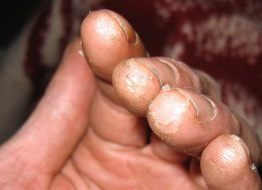
The other thing I love about the 12-string is where it fits in the mix. On the spectrum it reaches an entire octave higher than a six (and 2 notes lower when tuned to D). As you become more of a 12string player you can pick individual strings of the pair. This has some advantages that you just don't have on a six. It can get really confusing, however, when fingerpicking out a melody and the high note is where the low notes usually are and is played with your thumb instead of a pinky, but you have the advantage of economy of hand movement - you can do a 3-octave climb without moving your left hand much.

A very common complaint is feedback, as with most acoustic guitars. This isn't a guitar issue really, it is a sound guy issue. Feedback in a small club is usually due to a little tiny stage and two big monitors and/or poor speaker placement. Feedback happens when the pickup in your guitar is sending to the speakers the sound coming out of the speakers. So, when you put an acoustic guitar's soundhole in front of a speaker and it is so loud that it is being picked up by your guitar, a loop is created at that frequency and it howls. In small venues it can really be a problem but the answer is simple. Be behind the FOH speakers and either unplug the monitor, turn it or tip it away from the guitar, or use a notch filter (feedback suppressor). Make sure the decibel levels are at a safe and reasonable volume for the small environment and make sure you measure the levels with the house full of people. Learn at which frequencies your particular guitar usually squeals and you can tell the sound guy, "Hey my axe needs a dip at 250" or whatever.